Word Fusion: Association
- 3.8
- Rating
- 10.00K
- Installs
- Free
- Price
 Analysis by App-foxy
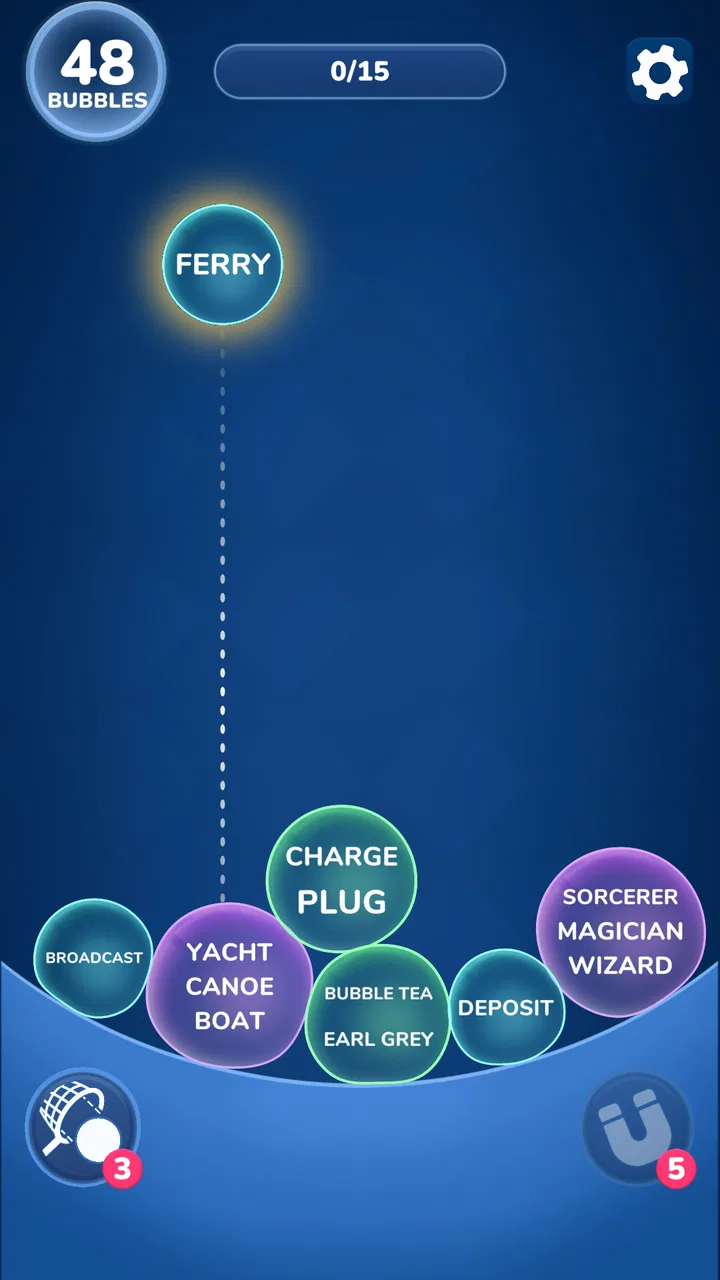
Word Fusion: Association is the kind of word game I reach for when I want a short mental break rather than a long, involved session. Its basic idea is easy to understand: bubbles appear on the board, and I look for words that belong to the same category so I can clear them. That simple combination makes it approachable, but it also means the quality of each puzzle depends heavily on how clearly I can spot the intended connection.
Developed by Fugo Games, this free game sits in the word category and is suitable for everyone. It has reached over ten thousand installs, with an average rating of 3.8 from around forty ratings. That is a modest sample, so I would treat the score as an early signal rather than a final verdict. After spending time with it, my impression is that the appeal comes from the quick loop: observe the bubbles, recognize a relationship, make a match, and try to keep the board under control.
The store summary captures the central action, but it does not explain the small decisions that make or break a round. This is not simply a vocabulary test. It asks me to manage attention, avoid jumping at the first word that seems plausible, and recover when a choice leaves the board less obvious than before. The best way to play is to think in groups, not isolated words.
You May Also Like

 Blood Strike: 2.5 Anniversary
Blood Strike’s Loadouts Turn Every Drop Into a Tactical Gamble
A close look at Blood Strike’s custom loadouts: how fast access to signature weapons reshapes its battle royale rhythm, rewards preparation, and narrows the gap between fights.

 Pandora - Music & Podcasts
Pandora’s Music Is Easy to Start, but Harder to Recover
Pandora’s strength is its low-effort path from a seed to a station. Its weak spot is how much confidence it asks you to place in connection, setup, and quiet recovery.

 8 Ball Pool
 Is Built on Rivalries, Rematches, and Routine
A close look at the rivalries, rematches, shared routines, and unanswered safety questions that turn a quick pool match into a persistent mobile community.

 Samsung Music
’s Quiet Strength Is Playing What You Already Own
Its reach comes less from spectacle than from dependable access to a personal library. That simplicity is both the app’s strongest retention engine and its ceiling.

 AccuWeather: Weather Radar
AccuWeather Review: A Quick, Clear Forecast for Everyday Decisions
For everyday plans, the best forecast is the one you can understand quickly. AccuWeather makes rain timing, radar, and local conditions easy to act on, with a few trade-offs.

 Hill Climb Racing
Why Hill Climb Racing Still Turns Crashes Into One More Run
A tiny car, a bumpy hill and one more upgrade: Hill Climb Racing keeps resurfacing because its simple chaos makes every near-miss feel personal.
More From Our News Desk
View All News


What makes a round satisfying, and where players can get stuck
The opening moments are usually the most comfortable. I scan the available bubbles and look for a category with several obvious members. Finding one gives the board a sense of direction, because a successful match reduces visual clutter and makes the remaining possibilities easier to compare. When the connection is clear, the game feels brisk without being mindless.
The difficulty appears when two or more words seem related but do not belong to the same intended group. Everyday language is full of overlapping associations. A word can describe an object, an activity, a place, or a quality, and the board may encourage me to follow the wrong interpretation. That is where careless tapping becomes costly. I have found it more useful to ask, “What do these words have in common as a set?” rather than, “Can I explain why these two words are connected?”
Another common sticking point is visual scanning. If I focus only on the most noticeable bubbles, I can miss a quieter combination elsewhere on the board. A better routine is to sweep from one side to the other, mentally grouping words by possible themes. I do not commit immediately. I first collect a few candidate groups, then choose the one with the strongest evidence.
This approach is especially helpful for players who normally enjoy crossword puzzles or anagrams but find association games less predictable. Crosswords provide fixed clues and crossing letters. Anagrams give a clear letter pool. Here, the challenge is more interpretive. The game rewards flexible thinking, but that flexibility can feel vague when a category is broad or when one word fits several possible themes.
Why the first move matters more than it seems
My first move is not just about clearing words; it is also about preserving information. If I select a group that is only loosely connected, I may remove a useful clue and leave behind words that are harder to interpret. When I find a stronger group, I prefer to clear that one first, even if another option looks faster.
A practical trick is to separate certainty from possibility. I treat a group as ready when each word supports the same category in a natural way. If one member requires a long explanation, I leave the group alone and inspect the rest of the board. This reduces the number of speculative moves and makes the game feel more deliberate.
There is also a useful rhythm to the board. After clearing a group, I pause for a moment instead of instantly tapping again. The remaining bubbles are easier to read when I allow the visual arrangement to settle. That short pause is not dramatic, but it prevents me from carrying an outdated assumption into the next move.
Setup checks before blaming the game
Word Fusion: Association runs on Android devices using Android 8.0 or later. Before installing, I would check the operating system rather than assuming that any Android phone can run it. This is a basic step, but it avoids a frustrating start on an older device that does not meet the requirement.
The game is free to install, while optional in-app purchases range from $1.99 to $29.99 per item. I would make that part of the setup conversation if a child is using the device, even though the content rating is Everyone. An age-appropriate game can still involve purchase decisions, so checking the device’s purchase controls is sensible before handing it over.
I also recommend starting with a stable connection if the initial launch behaves strangely. That is general troubleshooting rather than a claim about a particular requirement: a fresh installation may need normal access to complete its first setup. If the game does not open, I would first close other demanding apps, restart the device, and try again before assuming the puzzle itself is broken.
Keeping enough free storage is another simple check. Word games are usually light compared with large action titles, but a device that is nearly full can make installation and updates unreliable. If the installation stalls, freeing space and retrying is more useful than repeatedly pressing the install button.
The current version is 1.6.0, so I would also check whether the installed copy is current when troubleshooting. Updates can change stability and compatibility, and an older build may behave differently from the version the developer currently supports. I would avoid deleting the game immediately, particularly if I care about progress and do not know how that progress is stored.
Recovering a session without losing the thread
When I get stuck during play, my first recovery step is not to restart. I revisit every remaining bubble and write down, mentally or on paper, the categories that each word might belong to. This turns a vague feeling of being blocked into a smaller reasoning problem. For example, I might sort possibilities into people, places, actions, objects, or descriptive terms, then look for a group with a consistent level of meaning.
If a move produces an unexpected result, I treat it as information. It may show that the game is using a narrower interpretation than I expected, or that I had built a category around one attractive word instead of the whole set. I then reassess the remaining board from the beginning rather than trying to defend the original theory.
A second recovery technique is to search for the most specific relationship. Broad groups such as “things used at home” can absorb too many words. Narrower relationships are usually more useful because they explain why the words sit together. When a candidate group has a precise label, I trust it more than a loose description that could include half the board.
I would only restart after testing the board carefully. Restarting can feel convenient, but it also removes the chance to learn how the puzzle is structured. If I do restart, I use the second attempt to challenge my first assumptions, not simply repeat the same opening move. This is one of the clearest ways to improve at association puzzles: treat mistakes as clues about the intended grouping.
Players may also wonder what to do if the interface stops responding. I would begin with ordinary steps: wait briefly, close and reopen the game, and restart the device if the problem continues. If the issue happens only once, it may be a temporary app or device hiccup. If it repeats, checking the installed version and the phone’s available storage is the next sensible move. I would not assume that a difficult puzzle is a technical failure just because the answer is not immediately visible.
When the app is not the cause
Some frustrations come from the phone rather than the game. A crowded notification panel, aggressive battery saving, or many open apps can make any quick-tap title feel less responsive. Before judging the controls, I would put the device in a calmer state: close unnecessary apps, make sure the screen is clean, and try again without switching rapidly between applications.
Touchscreen problems can also look like game errors. If taps fail in other apps, the issue is probably broader than this title. Testing the screen in a basic application gives me a quick comparison. Likewise, if the device is overheating or running very low on power, performance may become inconsistent. Letting it cool down and charging it before another session is a more useful test than repeatedly replaying the same board.
Network conditions deserve a similar distinction. If the game launches but a particular online-related action behaves oddly, I would test another connection and try again later. I would not conclude that the puzzle logic is wrong until the same behavior appears consistently under normal device conditions.
There is also a human source of friction: tiredness. Association puzzles become noticeably harder when I am multitasking or trying to play in a noisy environment. Because the game depends on subtle links between words, a distracted session can make a fair board feel arbitrary. For me, a short, focused attempt works better than playing while answering messages or watching something else.
Who will enjoy this particular word game
I think it suits players who like category puzzles but want something more immediate than a traditional crossword. It is easy to imagine using it during a commute, while waiting for an appointment, or as a brief evening activity. The bubble format gives the wordplay a visible objective: I am not merely identifying a theme; I am trying to clear the board efficiently.
It can also work well for families because the content rating is Everyone and the rules are simple enough to explain quickly. The main caveat is the purchase setup. I would let younger players try it only after checking the device’s purchase protections, especially because the available items span from a low single-digit price to a noticeably higher amount.
People who enjoy one definitive answer may find the association style less comfortable. If I prefer games with precise clues, fixed solutions, or a strong competitive ranking structure, a crossword, spelling challenge, or conventional word search may be a better fit. This game’s pleasure comes from interpreting relationships, so players who dislike ambiguity should know that before installing it.
It is also not my first recommendation for someone looking for a deep long-form game. The central action is focused and repetitive by design. That is a strength when I want a compact diversion, but it may feel limited if I expect a story, extensive progression, or several radically different modes.
How it compares with familiar alternatives
Compared with a standard word search, Word Fusion: Association asks for meaning rather than visual pattern matching. A word search rewards patience and scanning letters in different directions. Here, I scan terms and test their relationships. That makes it better for players who enjoy semantic puzzles, while a word search is more predictable for someone who prefers a clearly visible target.
Compared with an anagram game, this title gives me less help from the letters themselves. An anagram tells me that the answer is hidden inside a defined collection of characters. Association puzzles provide a broader field of interpretation. I find that more refreshing when I want variety in my thinking, but less satisfying when I want a strict, measurable language challenge.
Compared with crossword apps, the experience is faster to enter and easier to explain, but it may offer less depth per puzzle. Crosswords reward accumulated knowledge and careful use of crossing answers. This game instead tests whether I can recognize a shared category among visible choices. Neither approach is universally better; the right choice depends on whether I want deduction from structure or discovery through meaning.
The bubble presentation gives this game a more active feel than a plain list of words. Clearing the board creates momentum, and that visual goal helps prevent the experience from becoming a dry vocabulary exercise. The trade-off is that the presentation cannot solve a vague category for me. If the connection is unclear, attractive visuals do not replace a well-defined clue.
Small habits that improve the experience
I get better results when I read all the words before touching the screen. That first scan helps me notice repeated concepts and prevents an early guess from controlling the whole round. I also try to name a category in one or two words. If I need a sentence to justify it, I consider the grouping provisional.
Another useful habit is to look for words that are unusually specific. A very distinctive term can act as an anchor, helping me identify the category around it. Once I have an anchor, I search for companions that match the same meaning rather than simply sharing a distant association.
When two groups overlap, I reserve the word with the most possible uses until later. This is a subtle but valuable trade-off. Flexible words are often more useful as connectors, while highly specific words can confirm a category early. Spending the flexible word too soon may make the final group unnecessarily difficult.
I also keep my sessions short when concentration drops. Because the game depends on noticing relationships, forcing myself through a tired board rarely improves the result. A short break often works better than repeated random attempts, and it keeps the experience closer to the relaxed word-play session the design seems to encourage.
For a shared session, I would have each player suggest categories before anyone taps. That turns the game into a compact discussion exercise and reduces the chance that the fastest person makes every decision. It is a practical way to make the title more social without pretending it is a dedicated multiplayer game.
My practical verdict
After weighing the accessible rules against the occasional ambiguity, I see Word Fusion: Association as a pleasant choice for short word-game sessions. Its strongest quality is the way it combines recognition with board management: I need to find related words, but I also need to decide which group is safest to clear first. That extra decision gives the simple premise more texture than a basic matching activity.
The developer, Fugo Games, has positioned it as a free, Everyone-rated game, and the current 1.6.0 release supports a straightforward starting point for Android users on version 8.0 or later. I would still check purchase controls before letting a child play, since optional items are available. The rating of 3.8 from around forty ratings suggests a mixed but generally workable early reception, and the install count of over ten thousand shows that it has found an initial audience without making it a proven universal favorite.
My recommendation is strongest for casual players who like word categories, quick rounds, and puzzles that ask them to rethink an obvious connection. I would skip it if I wanted a story-driven game, a highly competitive word ladder, or clues with only one immediately recognizable interpretation. I would also approach it patiently if ambiguous groupings tend to irritate me.
In my view, the game is worth trying when you want a free, compact vocabulary challenge and are willing to slow down before making a match. Start by checking the Android requirement, secure the device’s purchase settings, scan the whole board, and treat uncertain groups as hypotheses rather than answers. With that mindset, its bubble-clearing format becomes a useful little mental reset instead of a guessing contest.
FAQs for Word Fusion: Association
01What is Word Fusion: Association and how does the gameplay work?
Word Fusion: Association is a word puzzle game based on making connections between related ideas. Each round presents words, clues, or concepts that you must associate correctly to form a meaningful group or solution. The gameplay is easy to understand but becomes progressively more challenging, requiring vocabulary, logic, attention, and creative thinking rather than simple word matching.
02Is Word Fusion: Association suitable for beginners and casual players?
Yes, the game is suitable for beginners because its core mechanics are straightforward and the early puzzles generally provide a gentle introduction. You do not need advanced language skills to start playing, although later challenges may require broader vocabulary and more flexible thinking. It works well for short sessions, making it a convenient choice for casual players and puzzle fans.
03Can Word Fusion: Association be played offline?
Whether all features work without an internet connection may depend on the version installed and the platform you use. The main puzzle experience may be available offline after installation, but advertisements, progress synchronization, updates, or optional online features can require connectivity. If offline access is important to you, check the app-store description and test the game before relying on it during travel.
04Does Word Fusion: Association include hints, advertisements, or in-app purchases?
The game may offer hints or assistance when a puzzle becomes difficult, and these features can sometimes be connected to advertisements, limited resources, or optional purchases. Free versions of word games commonly display ads between rounds or after requesting help. Before downloading, review the current store listing for pricing, advertising details, and purchase information, since these elements can change with updates.
05Is Word Fusion: Association appropriate for children and language learners?
Word Fusion: Association can be useful for children, students, and language learners because it encourages vocabulary development, spelling awareness, and logical connections. However, the difficulty and word selection may vary, so younger players could need help with unfamiliar terms or abstract associations. Parents should also review the game’s advertising, privacy, and purchase settings before allowing independent play.
Pros
- Simple word-association gameplay that is easy to understand.
- Short levels make it convenient for quick breaks.
- Helps exercise vocabulary and lateral-thinking skills.
- Clean interface keeps the focus on solving each puzzle.
- Gradually increasing challenge gives the game lasting appeal.
Cons
- Some puzzles may rely on subjective or unexpected associations.
- Difficulty can vary noticeably between consecutive levels.
- Limited gameplay variety may feel repetitive over time.
- Hints may reduce the satisfaction of solving tougher puzzles.
- Players seeking competitive or multiplayer features may be disappointed.

Word Fusion: Association
Gallery